Ceramic Mezuzah Case: Art, Tradition, and Connection to the Jewish Home
What is a Mezuzah anyway?
לפני שנבין מה זה מזוזה קרמיקה, צריך להבין מה זה מזוזה. מזוזה מורכבת מקלף מזוזה + בית מזוזה. הבית מזוזה יכול להיות מקרמיקה עבודת יד או כל חומר אחר ששומר על קלף המזוזה ואפשר להתקין אותו על ימין פתח הכניסה. מה כתוב במזוזה? כלומר מה כתוב בקלף המזוזה? עיקר המזוזה היא יריעת קלף העשויה מעור בהמה טהורה שנכתב עליה על ידי סופר סת"ם (ראשי תיבות: ספרי תורה, תפילין, מזוזות) בכתב מיוחד הנקרא כתב סת"ם 2 פרשיות – "שמע ישראל" ו"והיה אם שמוע".
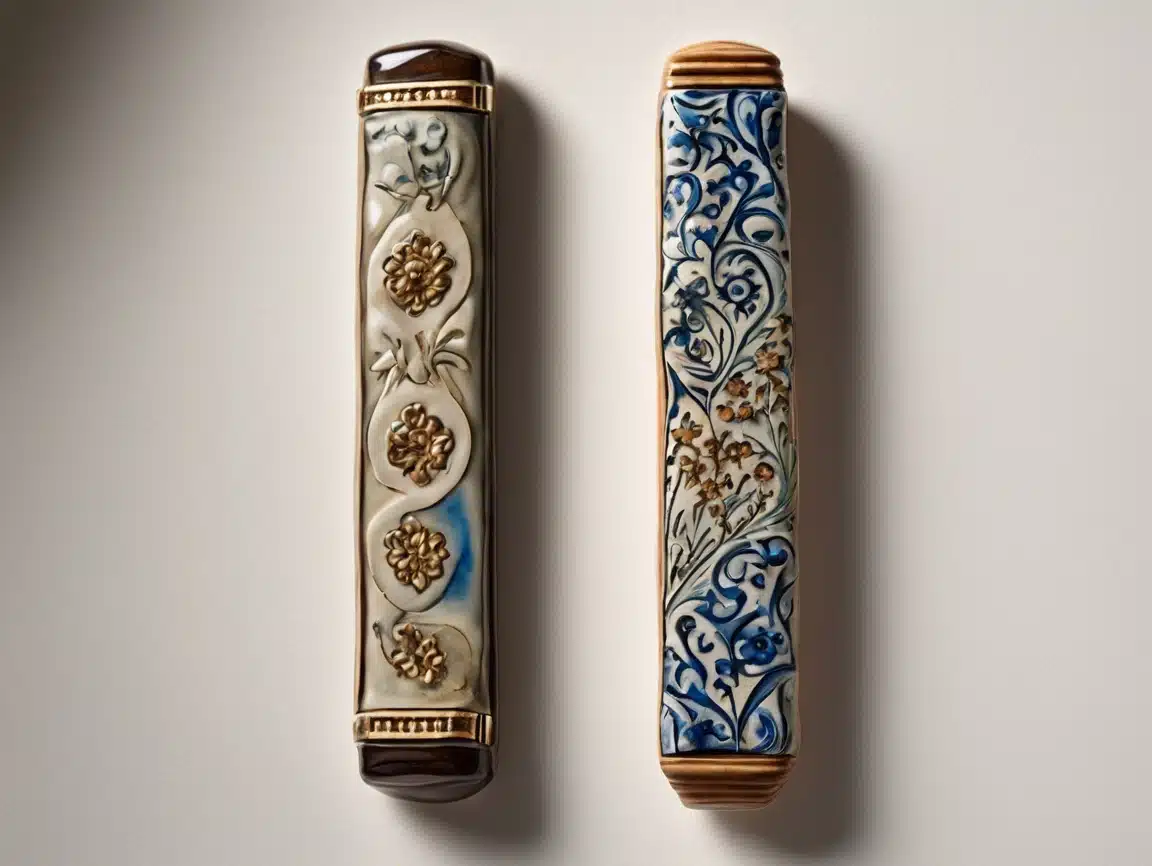
ואת קלף המזוזה הזה מגלגלים מהסוף להתחלה ומכניסים אותו אל קופסה מוארכת הנקראת בית מזוזה. ולאחרונה התחיל טרנד סוחף להכניס את קלף המזוזה לתוך בית מזוזה מקרמיקה עבודת יד. בית מזוזה קרמיקה הוא לא עיקר המזוזה אלא הוא שומר על המזוזה, הוא "הבית" שלה, למעשה הוא מיכל שמכיל את עיקר המזוזה שהוא קלף מזוזה שכתוב בו את 2 הפרשיות "שמע ישראל" ו"והיה אם שמוע" וכנ"ל.
גדולה ועצומה מצוות מזוזה אשר מזכירים אותה בכל יום בקריאת שמע שחרית וערבית אלפי שנים יהודים בכל העולם באומרם "וכתבתם על מזוזות ביתך ובשעריך".
ומובא בגמרא (מנחות לג:, ע"ז יא.) אמר רבי חנינא בוא וראה שלא כמידת הקדוש ברוך הוא מידת בשר ודם, מלך יושב מבפנים ועבדיו משמרין אותו מבחוץ, ומידת הקדוש ברוך הוא אינו כן, עבדיו יושבין מבפנים והוא משמרן מבחוץ, שנאמר "ה' שומרך ה' צלך על יד ימינך". וביאר בשו"ת חתם סופר (או"ח סימן קלו) שמצות מזוזה רמוזה בפסוק זה, כי כשיוצא ונכנס בפתח הקדוש ברוך הוא משמר אותו, והרי הוא יתברך כמו צל שמתלווה לאדם בעת הילוכו, וזו הכוונה במילים "צלך על יד ימינך".
ומובא בתיקוני זוהר (תיקונא עשיראה דף כה.) "דא רזא דמזוזה (זה סוד המזוזה) דאתמר בה (שנאמר בה) "וכתבתם על מזוזות ביתך" – מזוזת כתיב – זז מות", עד כאן לשון הזוהר. כלומר יש ביכולתה של מצות מזוזה להזיז את המוות.
והמרדכי כתב בשם מהר"ם: "ומובטח אני שכל בית שמתוקן במזוזה כהלכתה אין שום מזיק יכול לשלוט בו"
הכסף משנה כותב "כאשר המזוזה כתובה כתקנתה חופפת שמירת ה' יתברך על הבית".
How to place a ceramic mezuzah? How to install a ceramic mezuzah?Many ask — how do you install a ceramic mezuzah? The answer is that a ceramic mezuzah case is installed just like any other mezuzah case — on the right side of the doorway entrance to a room or home, at the upper third of the doorframe. Sephardim traditionally place the mezuzah upright, while Ashkenazim and Moroccan Jews tend to tilt it slightly diagonally. If a ceramic mezuzah or any other type was installed on the left side of the doorway, it is invalid (Shulchan Aruch Yoreh Deah 285:2), and must be removed from the left side and re-affixed on the right.
The mezuzah must be securely attached to the right side of the doorframe so it won’t fall, for example, with nails or adhesive. Before affixing the mezuzah, one should recite the blessing: "Blessed are You, L‑rd our G‑d, King of the universe, who has sanctified us with His commandments and commanded us to affix a mezuzah." Even when affixing multiple mezuzot, one blessing suffices for all.
It is important to learn the halachot to know which rooms require a mezuzah and which are exempt. Only a doorway with two doorposts and a lintel that leads to a room measuring four cubits (192 cm) by four cubits obligates a mezuzah. In some cases, the doorway is exempt, or requires a mezuzah without a blessing at affixing. Therefore, if unclear, one should consult a rabbi or a knowledgeable authority in halacha. You can see at this link Which room requires a mezuzah and which room is exemptChecking ceramic mezuzah – how often should a mezuzah be checked?There is no difference between a ceramic mezuzah case or a mezuzah case made of another material – all types of mezuzah cases in the home should be checked at least every 3.5 years. And a mezuzah fixed in a place that belongs to many people in a public area, not in a private home – must be checked at least every 25 years.
And even though it has been clarified that the mezuzot in the home must be checked only once every 3.5 years, some people, out of piety, have the custom to check the mezuzot every year in the month of Elul.
And it is an Israeli custom that if there is any trouble or illness in the home, may God forbid – the mezuzot are checked even if 3.5 years have not passed.Important to know: All protective virtues of the mezuzah exist only when the mezuzah is kosher according to halacha. Therefore, you should buy the mezuzah from a reputable store whose owner is known to be God-fearing. A person should bear in mind that the mezuzah contains 713 letters, and in each letter there can be several forms that can invalidate it. And if there is any invalidity, Heaven forbid, in one of the 713 letters, the mezuzah is invalid by law.How to take care of a mezuzah placed inside a ceramic mezuzah case so that it does not become invalid?One must take care that the mezuzah parchment does not become invalid or erased, so when painting the house near the mezuzot, whether it is a ceramic mezuzah case or any other material – the mezuzot should be removed before painting so that paint moisture does not damage the mezuzah. Also, when cleaning the doors, attention must be paid not to clean near the mezuzah with water and cleaning agents because this causes damage to the mezuzot and can invalidate them. And if there is a ceramic or any other type of mezuzah case outside, the mezuzah parchment must be placed inside a ceramic mezuzah case that is resistant to outdoor conditions so that heat from the sun and rain will not harm the mezuzah parchment.