Purchasing tefillin is one of the most exciting moments in a Jew’s life,
but when you enter a site and start reading, you suddenly encounter terms that sound like Chinese: “Fully Separated (Prudot Maleh),” “Cowhide (Behema Gassa),” “Foot-Press Squared (Ribua Regel)”…
Just before you get lost, we’ve organized the chaos so you know exactly what you’re buying.
Buying cheap or expensive tefillin?
When buying tefillin, the question is not just “how much does it cost,” but what value you get.
The parable and its lesson: quality you can feel
Think of it this way: you can reach a destination in an old, shaky car, or you can do it in a new, safe, and luxurious car. Both will get you to the same place, but the reliability, security, and driving experience will be completely different.
The same applies to tefillin – between “basic kashrut” and “mitzvah beautification,” there is a vast world of spiritual and physical quality.
Investment versus enjoyment: let’s look at the proportions
We do not hesitate to spend thousands of shekels on a hotel vacation that evaporates within a weekend. On the other hand, tefillin are a product that accompanies you for decades.
When you spread the cost over time, you discover it’s the most worthwhile and significant investment you’ll make in your life.
Your peace of mind
When you choose high-quality tefillin from a reliable source, you are purchasing security:
Writing with holiness: the work of a G-d-fearing scribe.
Halachic precision: without compromises and without doubts.
Durability: a product that will last and remain in excellent condition for years to come.
1. What is the difference between “hand” tefillin and “head” tefillin?
It may look similar on the outside, but the internal structure is completely different:
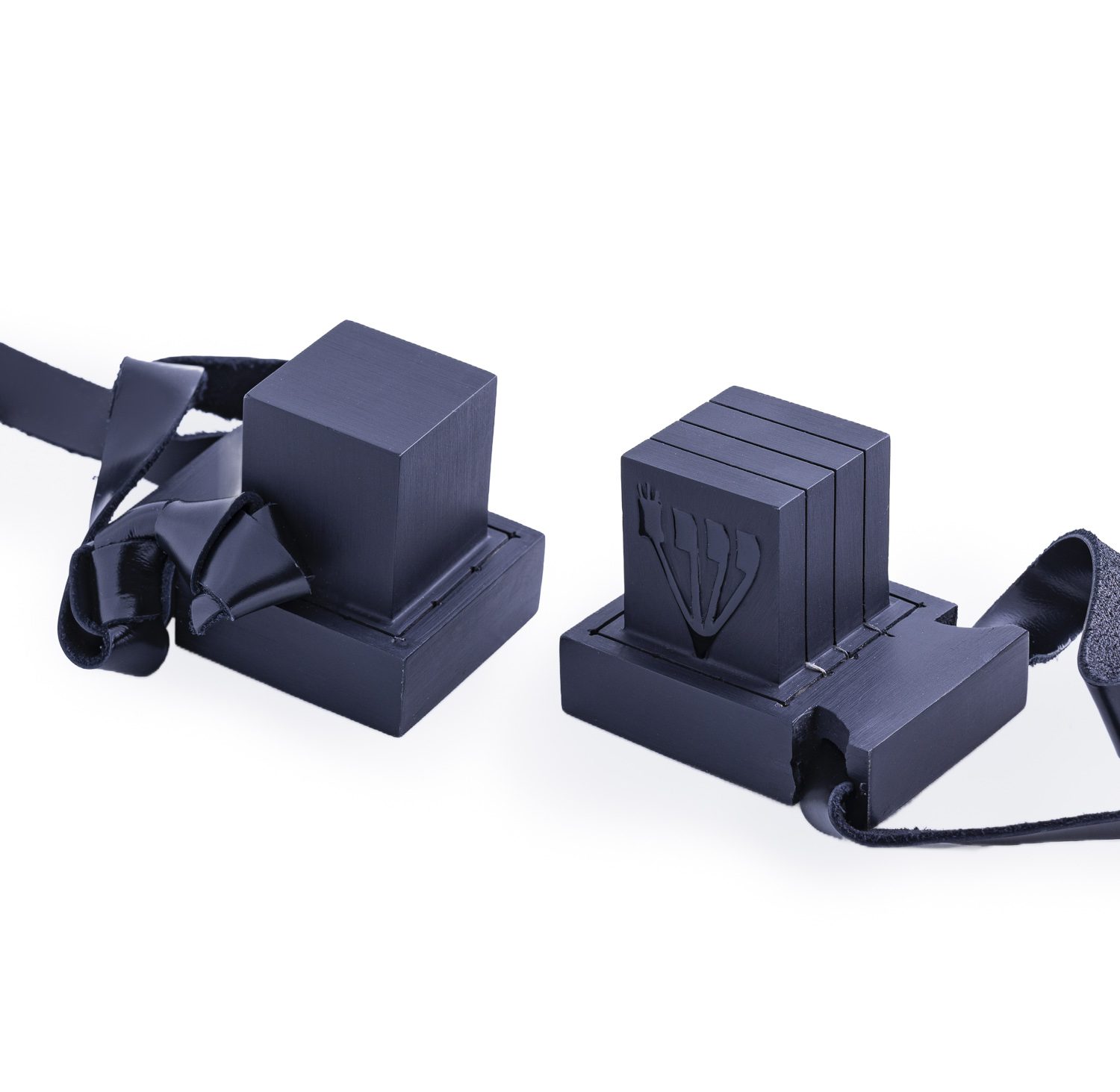
Hand tefillin: One closed compartment containing a single long parchment on which all four sections are written.
Head Tefillin: Made from a single piece of leather, but divided externally and internally into 4 separate compartments. Each compartment holds a parchment with one section.
2. Sheepskin (Behema Daka) or Cowhide (Behema Gassa)? (The story behind the leather)
This is the most significant difference for the durability of the tefillin:
Sheepskin (Behema Daka) (sheep and goats) – the traditional standard: Until a few decades ago, almost everyone used Sheepskin (Behema Daka) because that was what was accessible.
But this hide is very thin, difficult to process nicely, and tends to curve and lose its square shape over the years. Today it is considered only a basic level of kashrut.Cowhide (Behema Gassa) (cow or bull) – today’s revolution: Thick, strong, and substantial leather. It allows achieving amazing precision (“square”) that lasts for decades. This is the enhanced and recommended choice for those who want tefillin for life.
3. “Mostly Separated (Rov Prudot)” or “fully separated” – what does it mean?
Halacha dictates that in head tefillin, the four compartments must be separated from each other. Here come the distinctions in levels of enhancement:
Mostly Separated (Rov Prudot): In the past, tools were limited and the compartments were separated only at the top, and until a few decades ago “Mostly Separated (Rov Prudot)” was common – meaning at the bottom they remained glued together.
Though fully kosher, this is considered a basic level of enhancement.Fully separated (the recommended enhancement): Here the four compartments are completely separated from top to bottom, with no glue connecting them. This ensures that each compartment stands on its own as required by enhancement.
Fully joined: This is another level of beauty and precision. In this method, the tendon (the thread) that stitches and separates the compartments appears straight and clear even from the outside. This indicates a very high level of craftsmanship and maximal halachic precision.
4. Machine-made square or foot-made square?
For the tefillin to be kosher, their square must be made “for the sanctity of tefillin” (by a person who intends this).
Machine-made square: The square is made by an electric machine. The operator presses the button and says “for the sanctity of tefillin.” Most decisors permit this, and it is the common standard.
Foot-made square (enhancement “Koach Gavra”): Here the machine is physically operated by the person’s foot (like in old sewing machines). In this way, every cutting and shaping movement is done directly by the person himself. This is a significant enhancement that ensures every squaring action was done by the power and intention of a Jew.
5. The letter Shin (ש) on the tefillin
On the head tefillin, you will see the letter Shin protruding on both sides. There is no halachic difference between Sephardim and Ashkenazim in the making of the compartments. The only difference is in the graphic design of the letter Shin and the type of script in the parchments inside the tefillin – each according to the custom of his ancestors.
In summary: The price of tefillin reflects the quality of the leather, the level of precision, and the halachic enhancement. Do not compromise on the mitzvah that accompanies you all your life.
Contact us, and we will help you choose high-quality tefillin that will give you confidence and joy on every occasion.