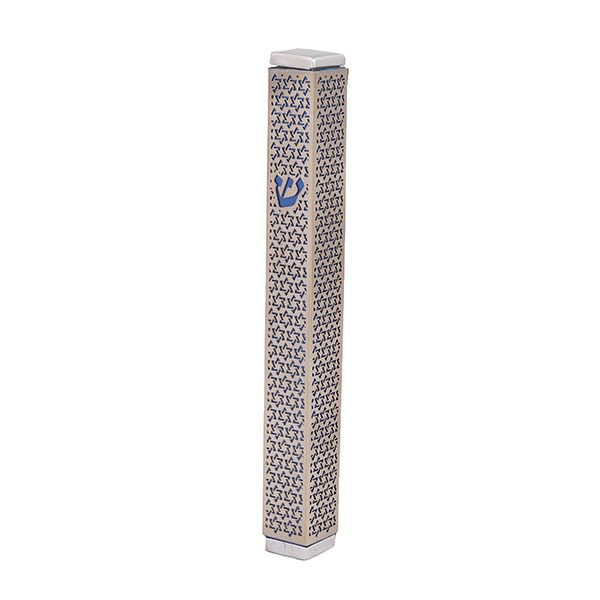
The boxes are standing in the living room, the smell of paint still in the air, and the movers have just finished their last cup of coffee. Moving is one of the most exciting events in life, but it’s also one of the most stressful. Amid all the chaos of connecting the internet, assembling cabinets, and organizing the kitchen, there is one moment when everything changes. The moment when the mezuzah is affixed.
This is the moment when the “property” becomes a “home.” It’s the moment we declare that within these four walls will dwell holiness, protection, and blessing. But for this moment to be perfect (and kosher), you need to prepare for it. A hammer and nail aren’t enough; you need the right equipment and the proper knowledge.
We’ve prepared for you a must-have checklist for entering a new home on the right foot, so you won’t find yourself rushing to find nails a minute before sunset.
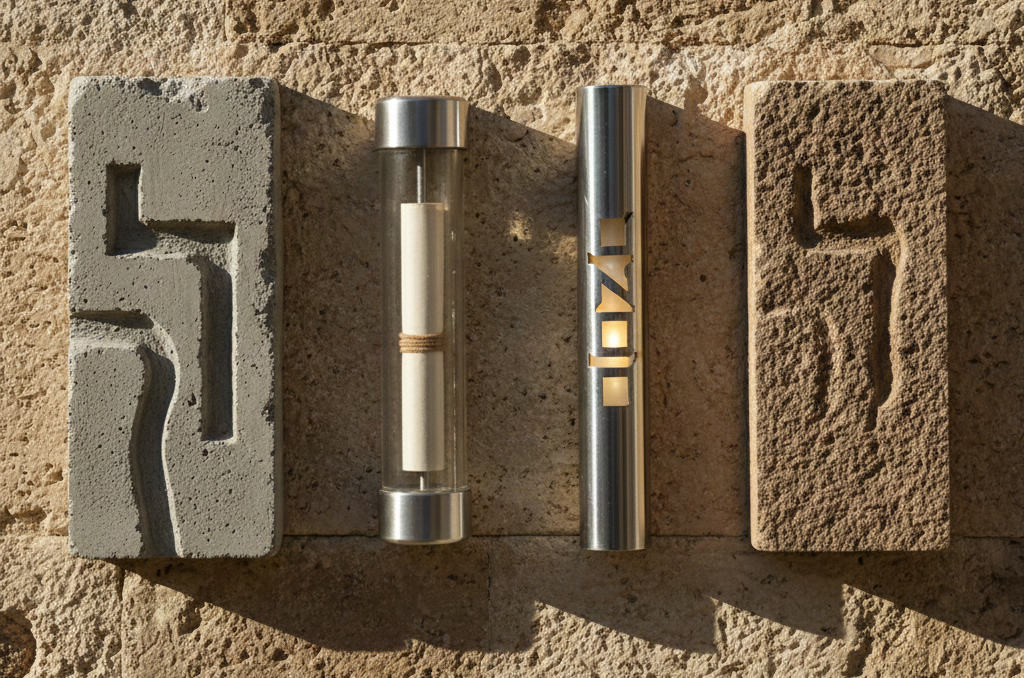
1. The beating heart: the mezuzah scroll (the “inside”)
Many spend hours choosing the designed mezuzah case, but forget that the essence of the mitzvah is the scroll inside.
- Quantity: Count all the doorways in the house that have a doorframe and a door (except toilets and bathrooms). Don’t forget the balcony, exit to the yard, or walk-in closet.
- Quality and kashrut: This is an item you must not compromise on. Make sure you purchase scrolls written by a G‑d fearing sofer stam and that have undergone double proofreading (computer + human). A very cheap scroll is usually suspect and invalid.
- Size: Make sure you buy a scroll that fits the size of the mezuzah case you chose (common sizes: 10, 12, or 15 cm). Our recommendation: a mezuzah scroll size of 10 or 12 cm and above is usually considered more beautiful and clearer.
2. The cover: mezuzah cases
The mezuzah case is designed to protect the scroll and honor the mitzvah (“This is God’s, and we will cherish it”). Here you have complete design freedom:
- For the front door: This is the house’s business card. It is recommended to choose an impressive mezuzah case, rain- and sun-resistant (very important!), made from materials such as stone, concrete, glass or stainless steel.
- For the bedrooms: Here you can “go wild” with softer designs, matching the room’s colors, or mezuzah cases made from warm materials like wood or ceramic.
- For the children’s rooms: Colorful mezuzah cases with delicate drawings can connect children to the mitzvah from a young age. Or simply take a matching set of mezuzah cases for the entire house.
3. The installation kit (don’t get stuck without it!)
Nothing is more frustrating than being ready to affix a mezuzah and discovering you have no way to attach it. Prepare in advance:
- Strong double-sided tape: Most modern mezuzah cases come with adhesive, but it’s best to ensure it’s high quality (“Super Glue” or industrial glue) so the mezuzah won’t fall off by accident.
- Nails/screws and a screwdriver: If you are affixing it to a wooden doorframe or an outdoor spot, sometimes glue alone isn’t enough.
- The blessing sheet: When the time comes, everyone forgets the exact wording. Print it in advance or open the “affixing a mezuzah” blessing (and the “Shehecheyanu” blessing if this is a newly bought apartment) on your phone.
4. The spiritual protector: foundational books and a charity box
A Jewish home is a home with content. Beyond mezuzahs, there are items that make the home’s atmosphere more sacred:
- It is recommended that basic holy books (Chumash, Tehillim, Mishnayot, Tanya, Siddur) be present in the home from the very first moment.
- Charity box: The custom dictates that a charity box should be fixed to the wall or placed in a prominent spot. Giving a coin to charity is a charm for protecting the house and its inhabitants.
The short guide: Where and how to fix it?
After you have all the equipment, here are 3 golden rules for correct fixing:
- Location: On the right side of the person entering the room.
- Height: In the upper third of the doorframe (approximately shoulder height of an average person), but no less than a tefach (about 8-10 cm) from the top of the doorframe.
-
Angle:
- Sephardic Jews: Fix the mezuzah straight (vertical).
- Ashkenazi Jews: Fix it diagonally, with the top of the mezuzah tilted inward toward the house.
In summary: More than walls and a roof
Entering a new home is an opportunity for a new beginning. The mezuzah is your personal guardian, standing at the door and reminding you at every entrance and exit that you are part of something bigger. Don’t settle for little – invest in mezuzot that will make you happy and protect you.
Looking for the perfect set for housewarming? On the site you will find a variety of elegant cards carefully checked and mezuzah cases in various styles—all at prices that leave room in the budget for furniture.
Wishing you a good and prosperous time!